Design of an art gallery bio app that lets artists share their story through the work they've created.
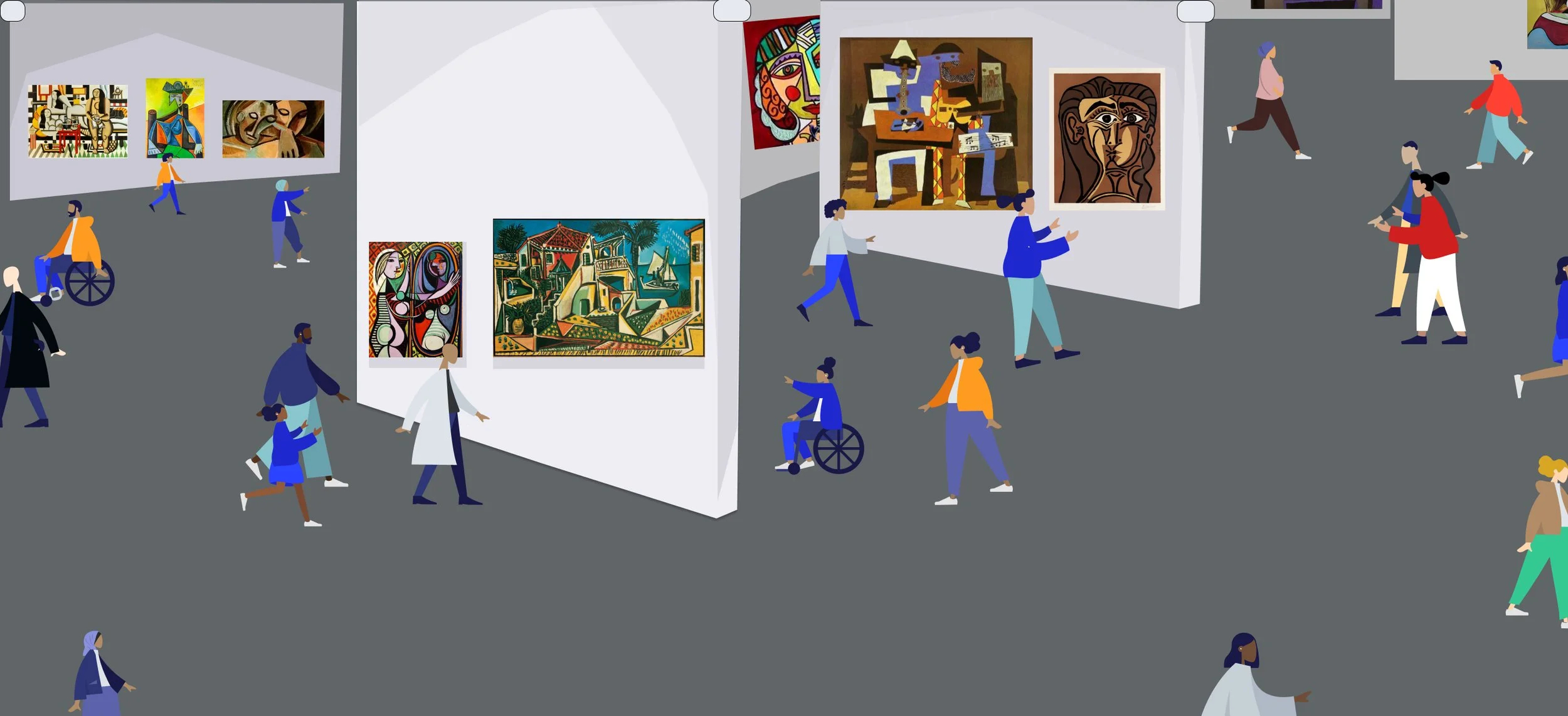
HUE is a mobile application that connects users with diverse audio narratives and cultural storytelling. Designed as the capstone project for the Google UX Design Certificate, HUE gives a platform to voices and stories from communities that are often underrepresented in mainstream media. The app allows users to discover, save, and share audio content organized around themes of culture, identity, and lived experience.
The name HUE reflects both the spectrum of human experience and the visual identity of the product, which draws from a rich, inclusive color palette to signal warmth, diversity, and accessibility.
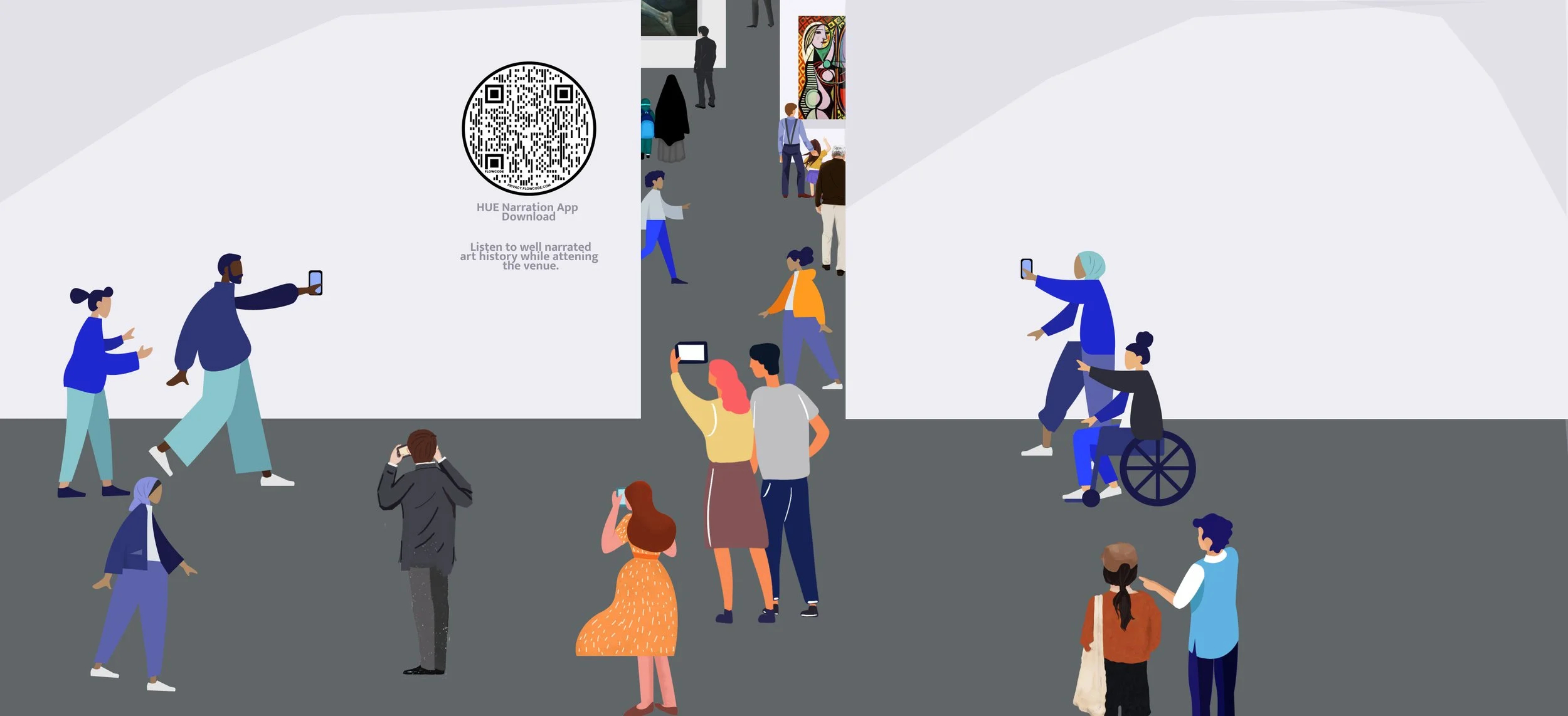
HUE surfaces audio content through a curated explore feed, personalized recommendations, and QR code discovery. Users create a profile, follow topics that reflect their interests, and build a library of stories they want to return to. Content is tagged by theme, language, and community so users can filter and find exactly what speaks to them.
The QR code feature is one of HUE's most distinct affordances: location-based codes placed in community spaces unlock exclusive content tied to that neighborhood, institution, or event. This bridges the digital experience with the physical world and turns everyday environments into portals for storytelling.

End-to-end UX designer. Responsible for research, information architecture, wireframing, prototyping, and visual design from brief to final deliverable.
Mainstream audio platforms prioritize algorithm-driven content that amplifies already-dominant voices. Underrepresented communities lack a dedicated space to share and discover their stories.
A full-featured mobile application covering onboarding, explore, content playback, QR discovery, profile, and favorites. Designed in Figma across four weeks as part of the Google UX Design Certificate.
A beautifully simple, inclusive audio platform that makes diverse storytelling discoverable, shareable, and personal. Every design decision should lower barriers and elevate the content itself.
The practice of stillness and intentional listening shaped how I thought about the HUE experience. Audio is intimate. The interface should get out of the way and let the listener sink in, the same way a meditation removes friction between the self and the present moment.
Optimism is a design tool. Building HUE required imagining a world where diverse voices are centered, not marginalized. That future oriented thinking pushed me toward design choices that were inclusive by default, not inclusive as an afterthought.
WNYC Radio set a bar for how public-interest audio content could be packaged into a clean, navigable app. I studied how they balanced discovery with depth, and how editorial curation could give users a sense of trust in the content they find.
Counterintuitive but real: McDonald's taught me about accessibility at scale. Their app is usable by anyone, in any context, quickly. HUE needed that same no-friction quality. If someone can order a burger in 30 seconds on a shaky bus, they should be able to find a story just as fast.
My mother's stories, her language, her way of moving through the world, are not represented in mainstream media. HUE started there. Designing for her meant designing for every person whose voice exists outside the algorithm's idea of what is worth amplifying.
I analyzed four platforms that operate in adjacent spaces: Spotify, Apple Podcasts, Audible, and Clubhouse. While each handles audio content well at scale, none of them centers cultural community or makes diverse storytelling a first-class feature. Spotify and Apple Podcasts treat discovery as an algorithmic problem, which tends to reinforce existing listening patterns rather than expand them. Audible is content-rich but paywalled and transactional. Clubhouse brought intimacy and voice to the forefront but was ephemeral by design. HUE occupies the space none of them claim: a curated, community-first archive of diverse audio that is free, discoverable, and built to last.
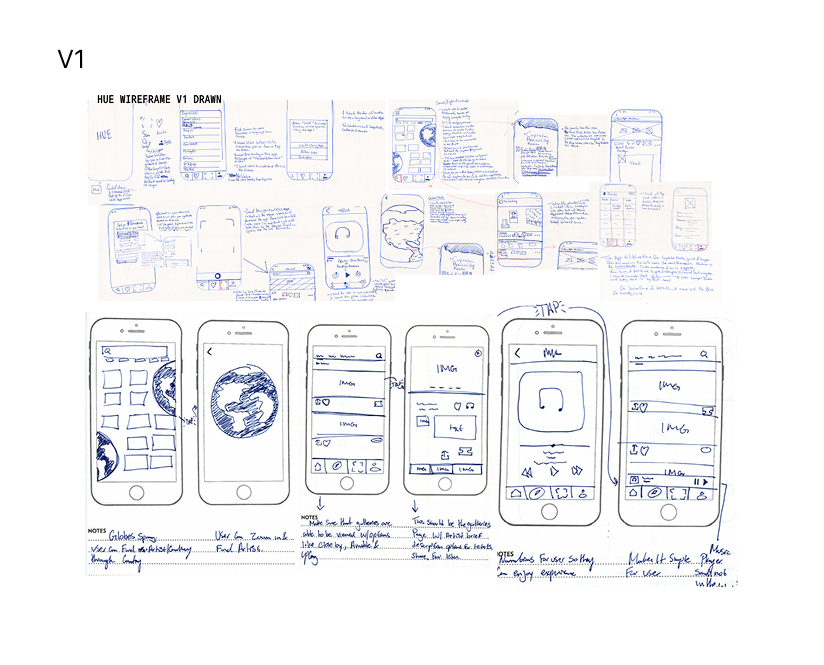
5 hand-drawn wireframes each drastically different from the next. Yet each wireframe had an aspect that made it to the final version.
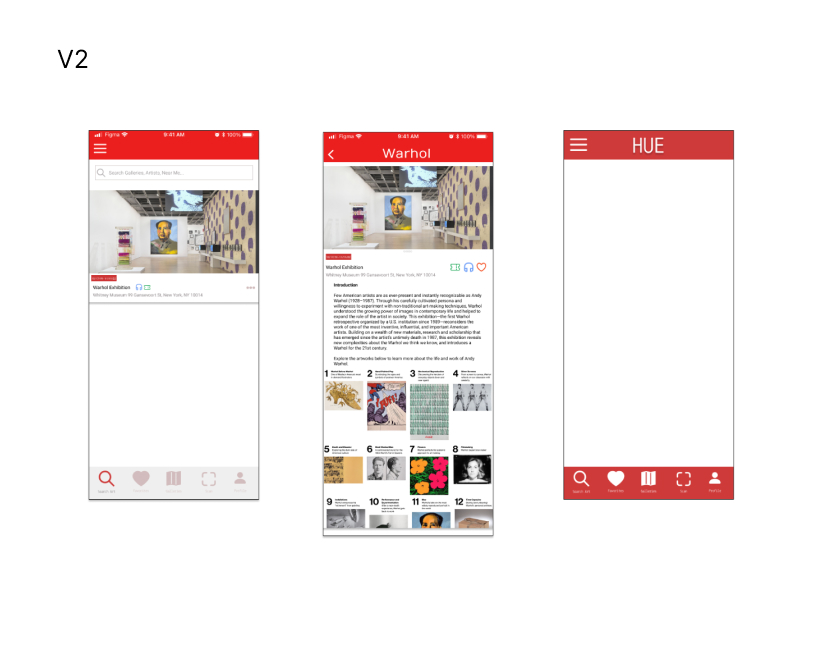
This idea behind this version was the CNN of art but it felt flat and lifeless.
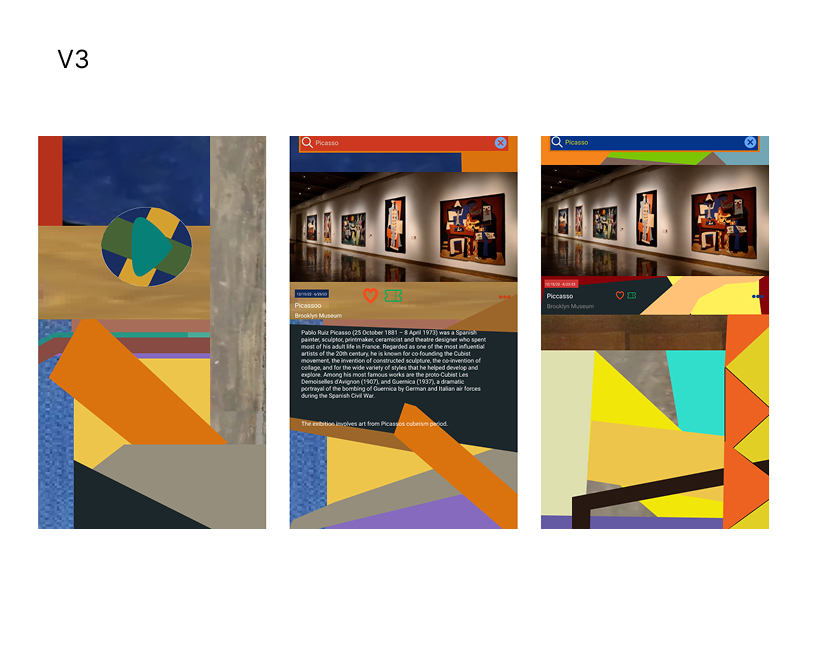
This version was meant to change interfaces into the style of whatever art period it was in. It did not work because the point of the app is to not be looking at it.
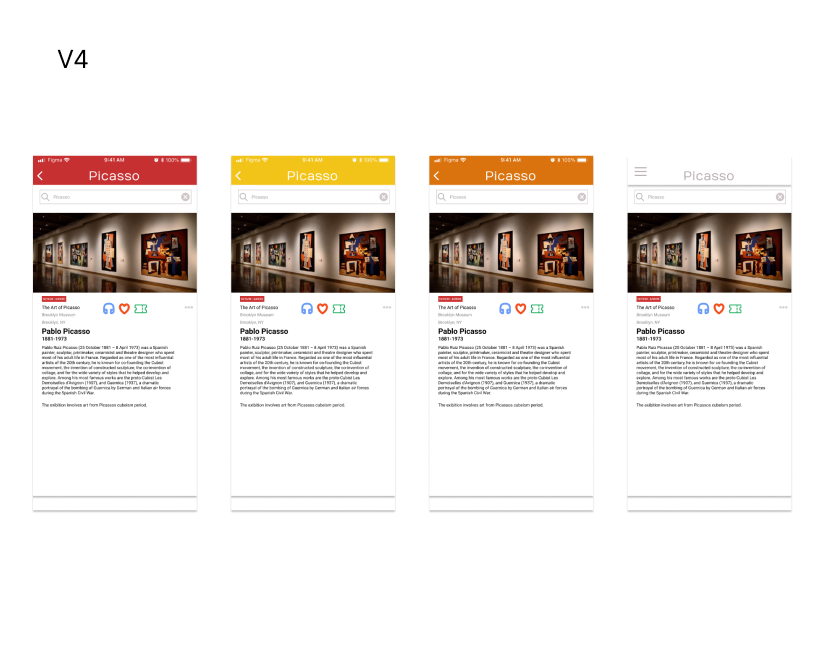
The third idea was to make the app colorful. Which again did not fit or make sense. The idea is slick, simple.
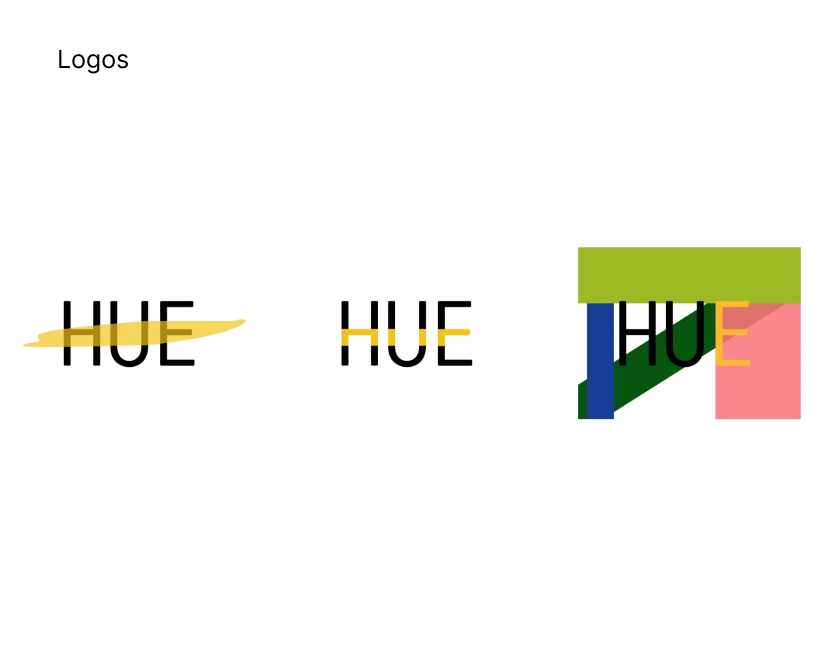
Early logo concepts. They did not look bad but they had no meaning.
The home screen opens with a personalized greeting and surfaces recently played content alongside recommended stories based on the user's listening history and followed topics. A horizontal scroll of featured collections anchors the top of the feed, giving editorial curation a permanent home in the interface. The visual hierarchy is intentionally calm: large cover art, minimal text, generous spacing.
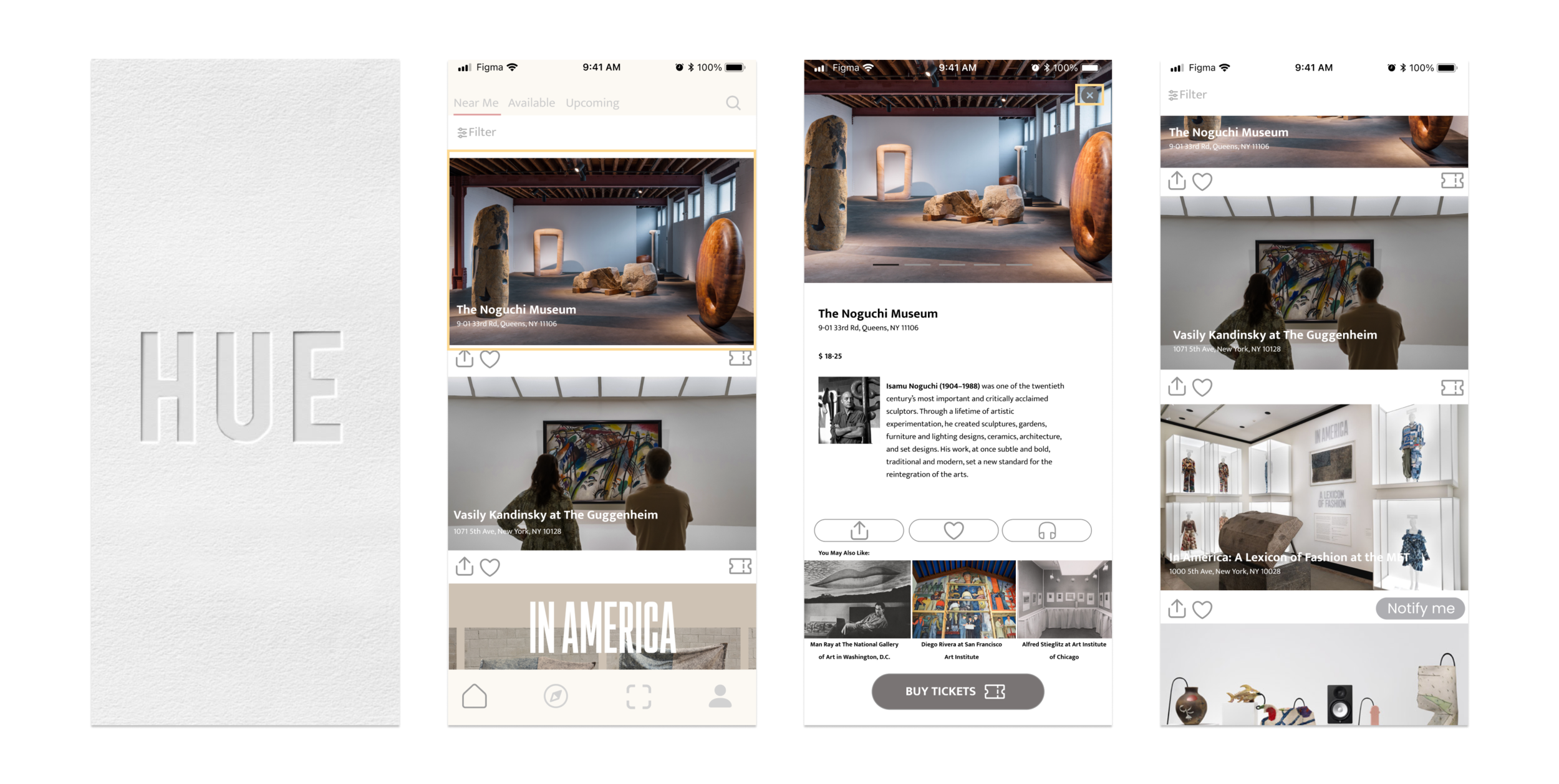
The Explore page is the discovery engine of HUE. Users browse by category, community, language, or mood. Content is arranged in a card-based grid that responds to filters applied at the top of the screen. The design avoids infinite scroll in favor of discrete sections that feel more intentional and less infinite.
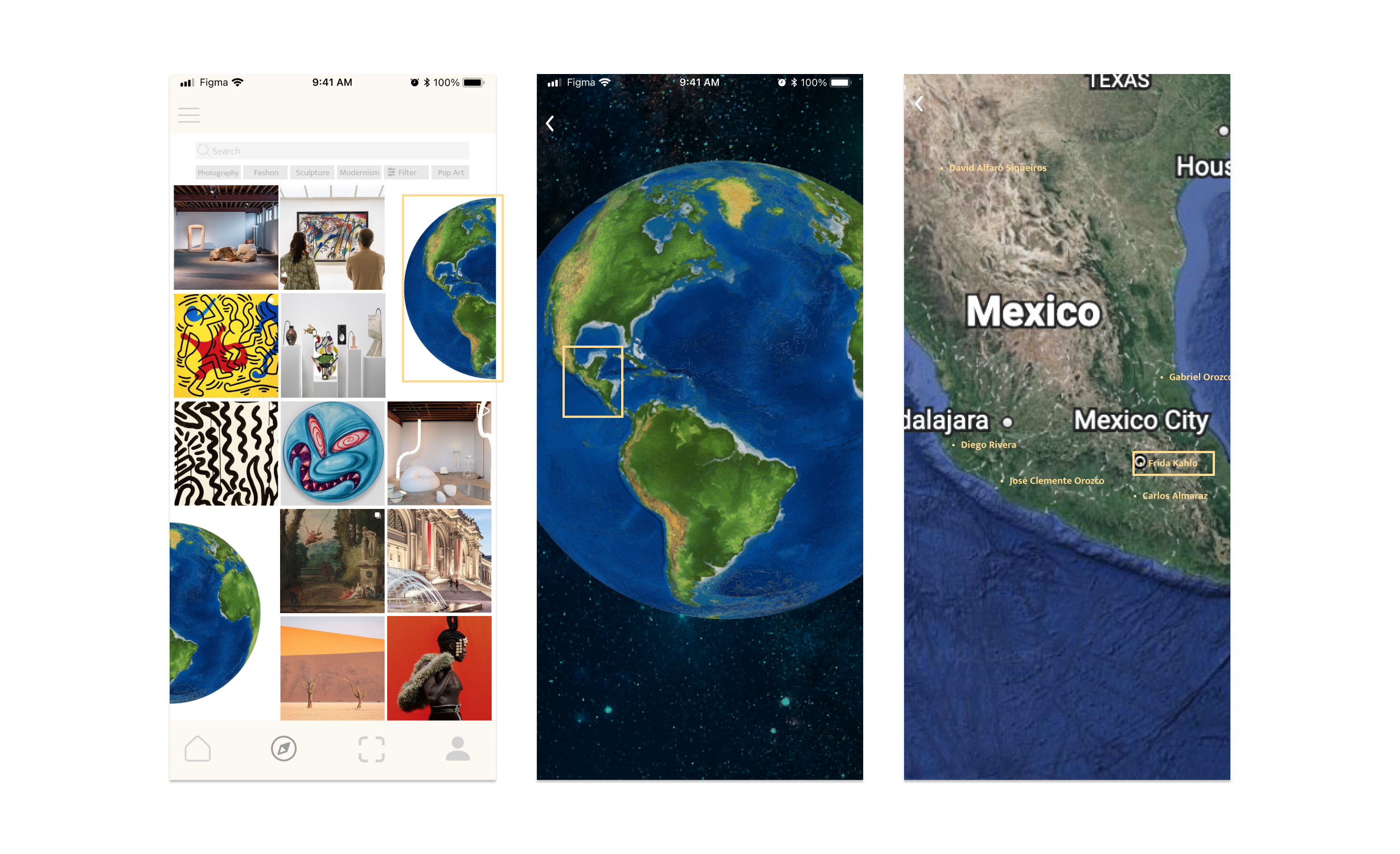

The QR Code feature is HUE's bridge between digital and physical. Scanning a HUE code in the real world unlocks location-specific or event-specific audio content that cannot be found anywhere else in the app. This creates a reason to seek out codes, turning neighborhoods, institutions, and community spaces into active participants in the storytelling ecosystem.

The profile page is where users collect the stories that matter to them. Saved content is organized into a Favorites shelf, and listening history provides a personal record of the communities and voices they have engaged with. The design is minimal: the content should feel like a personal archive, not a social feed.


HUE taught me that design is never neutral. Every choice, what content to surface, whose voice to elevate, how fast an interaction moves, carries values embedded in it. This project pushed me to be intentional about those choices and to let the people I was designing for, people whose stories are underrepresented, guide the product's direction. The Google UX Design Certificate gave me the framework; this project gave me the conviction.